Skills Needed to Eat Ethiopian Food
Injera is a sourdough-risen flatbread with a unique, slightly spongy texture. Traditionally made out of teff flour, it is a national dish in Ethiopia and Eritrea. A similar variant is eaten in Somalia and Djibouti, Yemen, and Sudan. In Eritrea and Ethiopia, injera is eaten daily in virtually every household with a majority of their meals. Preparing injera requires considerable time and resources. The bread is cooked on a large, black, clay plate over a fire. This set-up is a stove called a mitad, which is difficult to use, produces large amounts of smoke, and can be dangerous to children. Because of this inefficient cooking method, much of the area's limited fuel resources are wasted. However, many women in urban areas now use electric injera stoves, which are topped with a large metal plate. In the United States, injera is most often made on an electric Bethany lefse griddle.
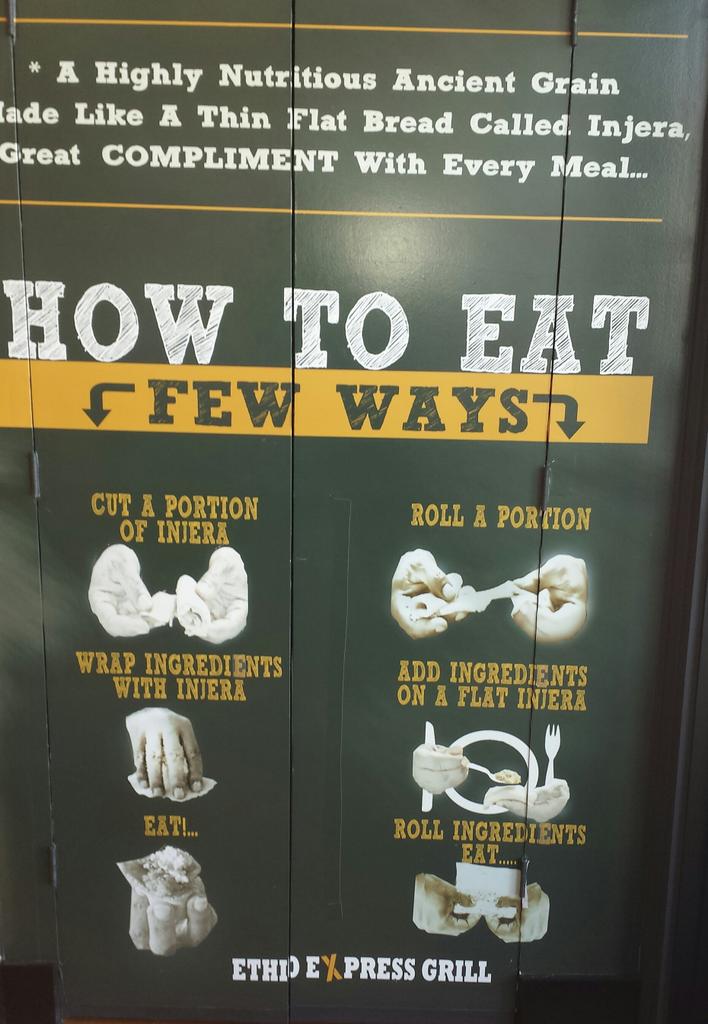
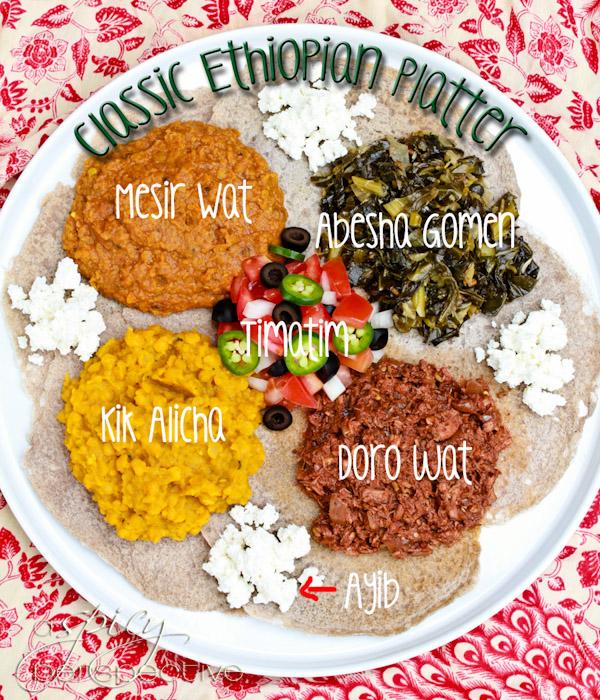
In Eritrea and Ethiopia, a variety of stews, meatless stews, and even sometimes salad are placed upon the injera for serving. Using one's right hand, small pieces of injera are torn and used to grasp the stews and salads for eating. The injera under these stews soaks up the juices and flavours of the foods and, after the stews and salads are gone, this bread is also consumed. Injera is thus simultaneously food, eating utensils, and plate. When the entire "tablecloth" of injera is gone, the meal is over.

I like the two pictures in the layout. It looks good! I also like how you talk about two different food types.
ReplyDeleteThis looks like such a delicious and healthy dish! The pictures show it all!
ReplyDelete